ICA 2026

20-24 July 2026‌ - L’Institut Agro, Montpellier, France‌

Bandeau - ICA 2026

Plenary speakers

MONDAY, JULY 20th
Gerald-Krantz

Gerald KRANTZ

Navigating the Future of Acarology: Honoring Tradition, Advancing Knowledge

+

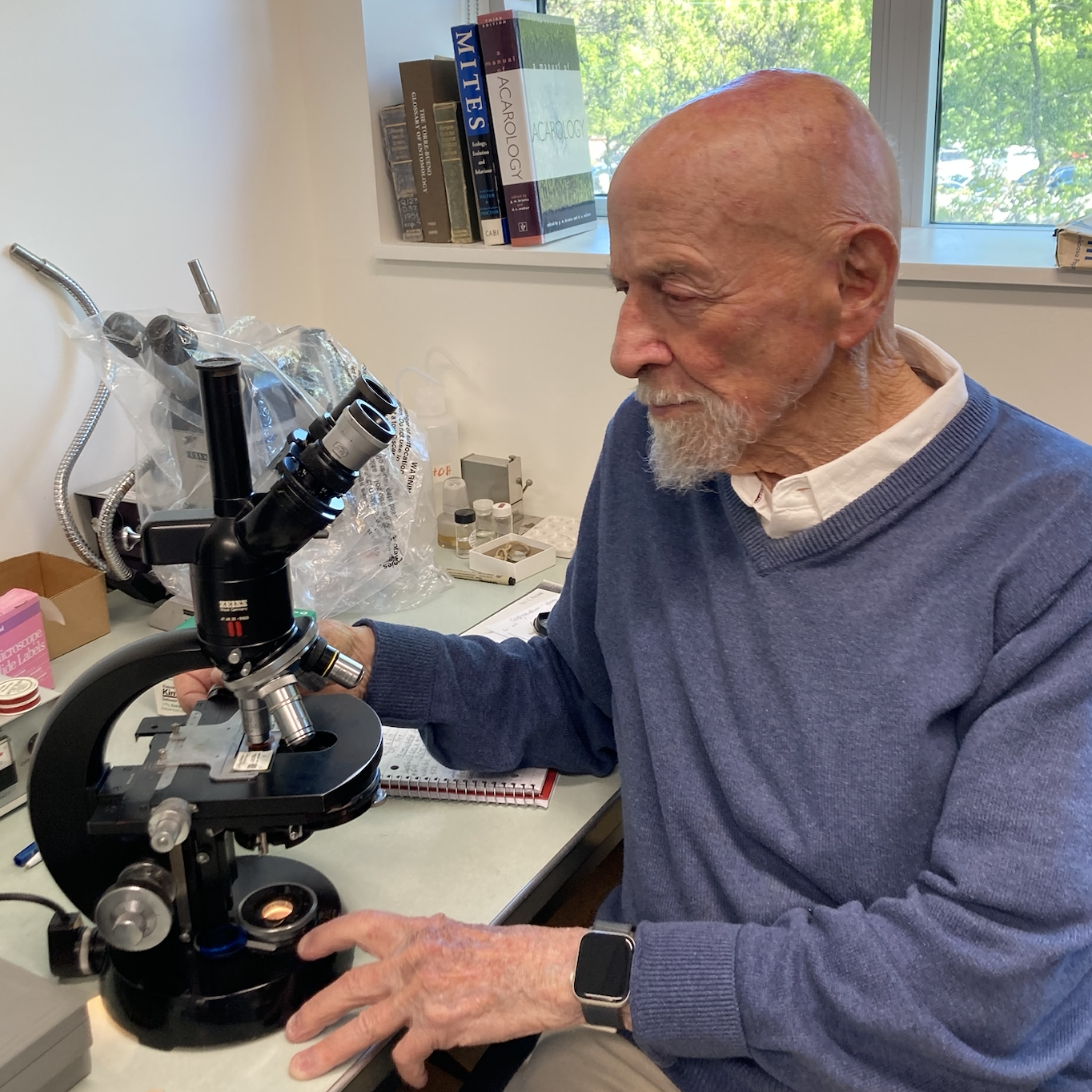
Professor Emeritus Gerald W. Krantz has been engaged in acarological research since 1955 at Oregon State University, Corvallis Oregon, USA, since 1955, working primarily in the areas of systematics, behavior, functional morphology and ecology of insect-associated Mesostigmata, with special interest in the family Macrochelidae. He has published more than 150 research papers on mites, and in 2009 he co-edited and contributed to the third edition of “A Manual of Acarology”, first published in 1970. Among his many activities, Dr. Krantz was microzoologist and Deputy Leader for the American Quintana Roo Expeditions of 1965 and 1968; elected Associé du Muséum National d’Histoire Naturelle, Paris, 1984; Senior Research Scientist, CSIRO, Pretoria, South Africa,1979; Visiting Research Professor, Muséum Jean Henri Fabre, Serignan, and Laboratoire de Zoogeographie, Université Paul Valéry, Montpellier, France,1989; Visiting Research Professor, University of São Paulo, Brazil, 2000, 2001.

TUESDAY, JULY 21st
Owen-Seeman

Owen SEEMAN

Phoresy: an acarological journey from its purest form to its peculiar fringes

+

Owen Seeman became an acarologist in 1993, which is when he met Dave Walter, who informed him that his proposal to study microhymenoptera parasitising ticks was boring and it would be more fun to work on ameroseiid mites living in flowers and phoretic on bees and birds. Thus began a permanent fascination for mites, particularly Trigynaspida on log-inhabiting arthropods, and the delightful but somewhat grubby Podapolipidae, which are sexually-transmitted parasites of insects. His interests lie mostly in taxonomy and systematics, phoretic relationships, and parasites of insects and plants. He has published over 130 papers on numerous aspects of acarology, covering more than 35 different families in both major mite groups.

WEDNESDAY, JULY 22nd
Philippe-Tixier

Philippe TIXIER

Title up coming

+

Philippe Tixier is an agroecologist at CIRAD, currently based in Vientiane, Laos. His work explores how biodiversity and ecological processes can contribute to the regulation of pests and diseases in tropical agroecosystems. He combines field ecology, food-web analysis and modelling to study tropical cropping systems, especially banana-based systems and diversified agroforestry. A central focus of his research is the role of biodiversity in ecosystem functioning and pest regulation. His work has addressed a wide range of pests and diseases, including banana weevil, nematodes, black leaf streak disease and coffee leaf rust, while also examining how plant diversity, landscape structure and trophic interactions shape ecological regulation. More recently, he has used computer vision, in situ imagery and object detection to quantify arthropod interactions and biological control directly in the field.

Jules-Van-de-Putte

Jules VAN DE PUTTE

Title up coming

+

Jules Van de Putte is a computer scientist at INRAE, in Montpellier, France. He works as a research engineer at the Centre de Biologie et de Génétique de l'Environnement (CBGP). He is a former member of the Pl@ntNet team, where he developed models of computer vision for the identification of plant diseases. His current research focuses on the application of machine learning, and more specifically deep learning techniques as a tool to developp new methodological approaches in population genetics, taking advantage of the large volume of data made available by the rise of next generation sequencing. He is particularly interested in the intersection of computer science and biology, and how machine learning can be used to address complex questions in population genetics. He mainly works with new generation simulation based inference approaches, leveraging the power of deep learning to improve our understanding of genetic diversity and evolutionary processes. He is also interested in designing neural network architectures adapted to the specificity of genomics data.

THURSDAY, JULY 23rd
Olivier-Duron

Olivier DURON

Beyond pathogens: Medical biases and the symbiotic reality of tick microbiomes

+

Olivier Duron’s research focuses on ticks and their interactions with microbial communities, including both pathogens and symbionts. It lies within a multidisciplinary framework in health ecology, at the interface of evolutionary biology, host–microbe interaction ecology, and epidemiology. Using ticks as biological models, he investigates how microbial interactions shape their adaptation to environmental constraints. In particular, his work explores how these interactions contribute to the evolutionary specialization of ticks toward strict hematophagy. By moving beyond a strictly pathogen-centered perspective, his research aims to better understand microbial dynamics within tick hosts and their implications for assessing infectious risk.

FRIDAY, JULY 24th
Samuel-Bolton

Samuel BOLTON

Unraveling mite origins amid the controversy over chelicerate evolution

+

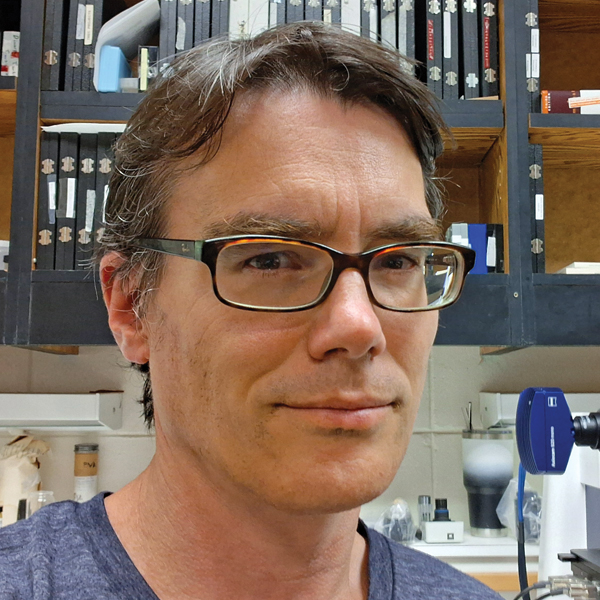
Samuel Bolton is the curator of mites at the Florida State Collection of Arthropods. Much of his research has centered on the morphology and systematics of Endeostigmata, a group pivotal for understanding early acariform evolution. His interests now extend to general mite morphology, with particular attention to character systems that have been historically misinterpreted. His recent research contributes to the reinterpretation of the origins of mites and the broader Chelicerata in light of phylogenomic analyses that challenge the traditional chelicerate framework.